Find the right one for snacking, baking and more.
Browse varietiesNot sure which apple to buy? Find the right one for snacking, baking and more.
Browse varieties
York Imperial is a firm, tart-sweet heirloom known for its lopsided shape. You rarely see it in the produce aisle, but it is one of the most important processing apples in the eastern United States, used for applesauce, pie filling and juice.
York Imperial grew from a chance seedling in York County, Pennsylvania, in the early 1800s. The story most often told is that the original tree stood on John Kline's farm in Hellam Township, where local children noticed that its apples, lying on the ground, were still good to eat the following spring. Some older accounts place the tree on a Mr. Johnson's farm near York instead. Either way, the person who made it famous was Jonathan Jessop, a Quaker clockmaker and nurseryman, who took grafts from the tree and began selling it from his Springwood Farm near York in the 1820s.
Jessop first sold it as Jonathan's Fine Winter (also recorded as Johnson's Fine Winter), a name that pointed to its talent for lasting through the cold months. In the 1850s, a horticulturist named Downing praised it as the Imperial of Keepers, and the name York Imperial stuck. Most sources credit Andrew Jackson Downing, though at least one credits his brother Charles. By 1895 it was the leading apple in Maryland, Pennsylvania, Virginia and West Virginia, and in the early 1900s growers shipped barrels of it to Europe until British import restrictions around 1930 cut off that trade.
York Imperial is still a big deal, just not in the produce aisle. In a recent season, the United States grew an estimated 3.7 million bushels of York apples, 2.7 million of them in Pennsylvania, where Yorks made up about a quarter of the state's apple crop. Most of the rest came from Virginia and New York. About 97 percent of the crop goes straight to processors to become applesauce, pie filling, sliced apples, juice and vinegar. A Pennsylvania historical marker honoring the apple, dedicated in 1948, stands on South George Street about two miles south of York.
Picked fresh, York Imperial is firm and fairly tart, with only a mild sweetness and not much aroma. It changes in storage. Over several months the tartness softens and the apple turns sweeter and more mellow, and growers say it makes a perfectly good eating apple by December or January.
The flesh is creamy yellow, dense, firm and crisp, with a slightly coarse texture and plenty of juice. That density is a big part of why it keeps so long, and it is also why Yorks hold together in the pot and the pie plate.
Sweet
Tart
Crunch
Juicy
York Imperial is a classic cooking apple. Processors prize it because its firm flesh holds its shape in canned slices, its creamy yellow color makes an attractive sauce, and its small core means less waste. At home, that same firmness makes it an excellent pie apple. Try it in our Harvest Apple Pie, an apple crisp or baked apples, where the slices stay distinct but turn tender.
It also cooks down into a thick, flavorful homemade applesauce. Growers note that Yorks thicken a sauce noticeably when they are part of the blend. For a deep, dark spread, use them in slow cooker apple butter.
York is also pressed for cider and juice and was historically dried into apple slices. After a couple of months in storage, it is a pleasant, mellow eating apple as well.
Fresh eating
Fair
Salads and cheese boards
Fair
Baking and pies
Excellent
Sauce and apple butter
Excellent
Cider and juice
Good
Harvest
October
In stores
Fall through winter, mostly as applesauce and pie filling
York Imperial is a late season apple. In Pennsylvania it is typically harvested throughout October, and some growers pick into early November. A 1989 study described it as maturing between Stayman and Winesap, two other late apples, and noted that harvest can stretch over several weeks.
Thanks to its storage life, fresh Yorks can be found at orchard stands from October through the winter. Before modern cold storage, they could last for months, and they were known to keep in root cellars into April or May.
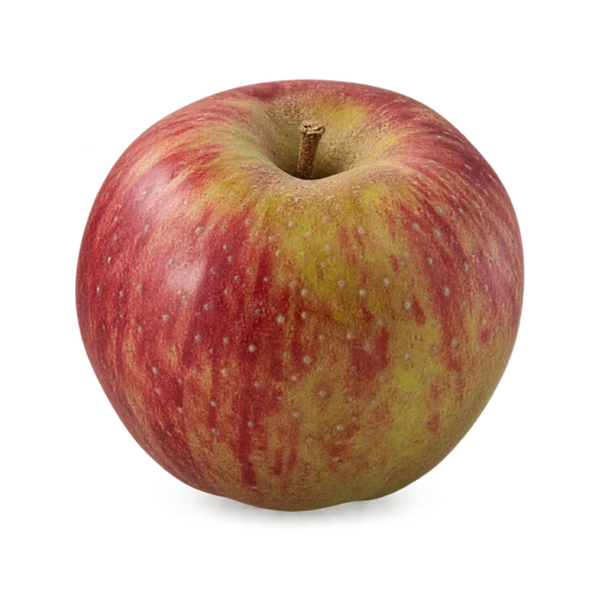
You can spot a York Imperial by its shape. The apple is medium to large and noticeably lopsided, flattened and tilted to one side, as though it were squashed. The skin is red, often in two shades of brownish red, with green-yellow streaks, specks and sometimes patches of russet showing through. Some apples carry a grayish film called scarfskin.
York is not known for its looks, and in fresh markets it lost ground long ago to redder, more uniform apples. Choose fruit that is hard and heavy, and do not worry about the odd shape. Corky spots on the skin, known as York spot or cork spot, are a known problem with the variety, so pass over apples with large corky patches or soft areas.
York Imperial earned its name by keeping. It is dense and resists bruising, so it ships and stores well, and processors hold it in regular and controlled atmosphere storage to stretch their season for months. Its flavor actually improves for several months after picking as it sweetens.
At home, keep Yorks in a bag in the refrigerator crisper drawer or in a cold, humid cellar or garage that stays just above freezing. Stored this way they can keep for months. Check them now and then and use any that soften for sauce or butter.
Hardiness
About USDA zones 4 to 8, per one large nursery
Pollination
Needs another apple variety nearby
Bloom time
Late
Tree size
Large and upright when mature
The York Imperial tree is large and upright at maturity and relatively easy to grow and prune. It is a heavy bearer, often producing about 20 bushels a year on a well kept mature tree, but it tends to bear heavily one year and lightly the next. Commercial growers thin the crop to even this out. Without thinning, the fruit crowds into clusters, and because the stems are short, some apples get pushed off the tree as they grow. It blooms late and needs a different apple variety nearby for pollination.
Disease is the main challenge. A 1989 review in the Fruit Varieties Journal called it moderately tolerant of scab and powdery mildew but susceptible to cedar rusts and fire blight, while Purdue University's current disease chart rates it susceptible to scab, powdery mildew and cedar apple rust and very susceptible to fire blight. The fruit is also prone to York spot, corky patches that growers reduce with boron sprays around bloom. Nurseries sell York Imperial trees, as well as redder strains such as Ramey York.
You probably eat York Imperial more often than you think, since it goes into a lot of store-bought applesauce and pie filling made in the eastern United States. Fresh Yorks, though, are rarely sold in ordinary grocery stores.
To buy them fresh, look for roadside stands, farm markets and orchard stores in Pennsylvania, Virginia and neighboring apple regions from October into winter. They are worth seeking out if you make your own applesauce or pies.
Mildly tart with a gentle sweetness that grows in storage. The flesh is dense, firm and crisp.
Its dense flesh holds up well in pies and baking, and it cooks down into thick, flavorful applesauce.
York Imperial is harvested in October and is usually in stores fall through winter, mostly as applesauce and pie filling.
No. York Imperial is an open variety, so any grower can plant it.
The lopsided, tilted shape is simply a trait of the variety and is how most people recognize it. It does not affect flavor, and processors like the apple anyway because it has a small core and yields a lot of usable fruit.
It comes from a nickname, the Imperial of Keepers, given in the 1850s because the apple stored so well through winter. York refers to York, Pennsylvania, where it originated.
Yes. About 97 percent of the York crop goes to food processors, mostly for applesauce, pie filling, juice and vinegar. Its firm, creamy yellow flesh gives sauce a thick texture and good color.
It can be, especially after storage. Fresh off the tree it is firm and tart, but after a couple of months it turns sweeter and mellower, and growers say it is a good eating apple by December or January.