Find the right one for snacking, baking and more.
Browse varietiesNot sure which apple to buy? Find the right one for snacking, baking and more.
Browse varieties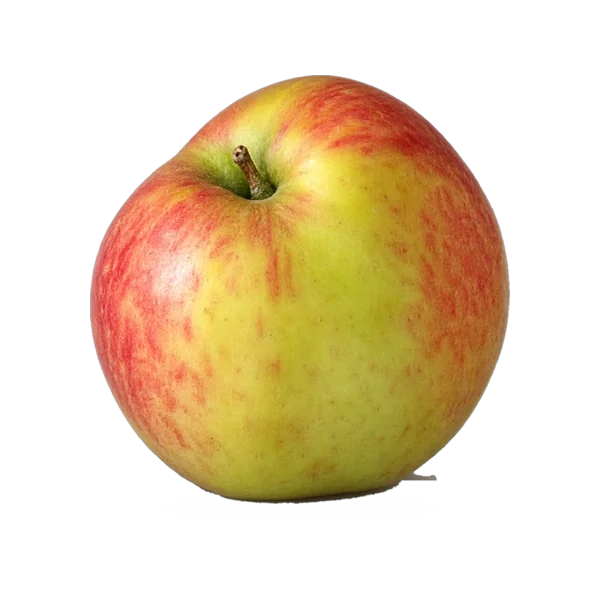
Gravenstein is an old European apple with a tart, sweet and very juicy flavor and a strong apple aroma. It ripens in summer and does not keep long, so it is a short-season treat.
Gravenstein is one of the oldest apples still grown for market. It was growing in Denmark by 1669 and takes its name from Gråsten (Gravenstein) Palace in the south of the country. Denmark loves it so much that the government named it the country's national apple in 2005.
In the United States, the Gravenstein story is really a Sonoma County story. Russian traders are said to have planted the first tree at Fort Ross on the Northern California coast in 1811. By the mid-1900s, thousands of acres of Gravenstein orchards covered western Sonoma County, and the fruit went into applesauce, juice and dried apples, some of it shipped to American troops during World War II.
Those orchards have mostly disappeared. Because Gravensteins ripen early, bruise easily and do not keep, many growers replaced them with vineyards or longer-lasting apples, and less than a thousand acres remain. Slow Food USA lists the Sebastopol Gravenstein in its Ark of Taste of endangered foods, and local growers still celebrate it every August at the Gravenstein Apple Fair in Sebastopol. You can even drive the Gravenstein Highway, a stretch of California State Route 116 that runs through the old orchard country.
Gravenstein tastes like an old-fashioned apple should: bright, tart and sweet at the same time, with a rush of juice and a strong, perfumed apple aroma. The flesh is cream colored, crisp and tender rather than hard.
The flavor changes over its short season. The first Gravensteins of summer are greener and tarter, and the ones picked later are more yellow, sweeter and softer. Either way, they are at their best in the first few days after picking, before the flesh starts to turn mealy.
Sweet
Tart
Crunch
Juicy
Gravenstein is famous as a cooking apple. It breaks down quickly and has plenty of flavor and acidity, which makes it one of the best apples there is for applesauce. Cook it with the skins on and the sauce turns a soft pink. Try it in our homemade applesauce or slow cooker apple butter.
It also makes a wonderful pie. Gravensteins soften more than firm baking apples like Granny Smith, so the filling is tender and saucy. If you like distinct slices, mix them with a firmer apple, as in our Harvest Apple Pie, or use them in a crisp, where a softer filling is a plus.
Gravensteins are also pressed for fresh juice and cider and dried into apple rings. And of course, a cold, fresh-picked Gravenstein is a great apple to eat out of hand.
Fresh eating
Good
Salads and cheese boards
Fair
Baking and pies
Excellent
Sauce and apple butter
Excellent
Cider and juice
Excellent
Harvest
Late July to August
In stores
Late summer only
Gravenstein is one of the first apples of the year. In Sonoma County, picking usually starts in late July or early August, and the harvest lasts only a few weeks. In Denmark and northern Europe it ripens later, in September.
The season is short because the apple itself is short-lived. Gravensteins soften within a couple of weeks of picking, and cold storage dulls their famous aroma, so they are not held in storage for months like Fuji or Red Delicious. If you see them, buy them.
Gravensteins do not look like supermarket apples. The skin is green to yellow with broken red and orange stripes, and no two look quite alike. Some are mostly green, some are mostly striped, and a natural red mutation called Red Gravenstein is almost all red. They are medium to large, often a little lumpy or lopsided, with thin, tender skin.
To pick a good one, look for apples that feel firm and heavy for their size and smell fragrant. Skip any with soft or brown spots. Small bruises are common because the skin is so thin, but they are only skin deep and do not affect the flavor. Choose greener apples if you like them tart, and more yellow ones if you like them sweeter.
Gravensteins are not keepers, so plan to use them within a week or two. Store them in the refrigerator, in the crisper drawer or a loosely closed bag, and handle them gently because they bruise easily. On the counter they soften within a few days.
Cut Gravensteins brown quickly, so slice them right before you use them or toss the slices with a little lemon juice. If your apples start to turn soft, cook them into applesauce or apple butter. Both freeze well, so you can enjoy Gravenstein flavor long after the season ends.
Hardiness
About USDA zone 5 and warmer
Pollination
Needs other varieties nearby
Bloom time
Early
Tree size
Large and vigorous
Gravenstein is a triploid apple, which means its own pollen is nearly sterile. The tree needs another apple variety nearby to pollinate it, and it cannot return the favor. Many growers plant two other varieties, so that all three trees get pollinated. Gravenstein blooms early, so choose partners that also bloom early in spring.
The tree grows big and vigorous and can take several years to start bearing. It also tends to bear heavily one year and lightly the next. Gravenstein does best in mild, damp climates like coastal Northern California and the Pacific Northwest, and it can struggle with very hot summers or very cold winters. It is resistant to cedar apple rust but very susceptible to fire blight, so it is not the easiest choice for humid regions.
Your best chance to buy fresh Gravensteins is in late summer in Northern California. Look for them at farm stands and farmers markets in Sonoma County, especially around Sebastopol, and at some local grocery stores in August.
Outside California they are hard to find. Some specialty fruit companies ship Gravenstein boxes for a few weeks each summer, and a few orchards in the Pacific Northwest and Nova Scotia grow them too. The rest of the year, look for Sonoma Gravenstein applesauce or juice.
Bright, tart and sweet with lots of juice and a rich, old-fashioned apple aroma. The flesh is crisp but softens quickly once picked.
Gravenstein is a classic for applesauce, pies and cider. It cooks down quickly and has plenty of flavor.
Gravenstein is harvested in late July to August and is usually in stores late summer only.
No. Gravenstein is an open variety, so any grower can plant it.
Gravensteins ripen early, soften within a couple of weeks of picking and lose their aroma in cold storage, so they cannot be stored for months like most grocery store apples. They are sold fresh for a few weeks in late summer and the rest is made into sauce and juice.
Yes. Gravenstein is one of the best applesauce apples. It cooks down quickly into a smooth, tangy sauce with lots of flavor, and it turns pink if you cook it with the skins on.
Yes. Gravenstein is a triploid with nearly sterile pollen, so it needs another early-blooming apple variety nearby. Many growers plant two other varieties so all the trees get pollinated.
In the United States they are grown mainly in Sonoma County, California, with smaller plantings in the Pacific Northwest. They are also grown in Nova Scotia, Denmark, Germany and elsewhere in Europe.